Getting a commercial vending unit into position looks simple until a delivery team meets a 780mm doorframe with an 820mm cabinet. Proper installation is an exercise in physical logistics, environmental checks, and electrical common sense.
What the Installation Process Truly Involves
Vending machines are heavy, dense pieces of machinery. An empty glass-front combo unit can weigh anywhere from 250kg to upwards of 400kg. Once loaded with canned beverages, chilled sandwiches, and glass bottles, that total floor loading increases significantly.
The physical installation begins well before the delivery truck drops its hydraulic tail lift. We evaluate the path of travel from loading bay to the refreshment zone. Are there thresholds to negotiate? Will a transport trolley leave scuffs on polished terrazzo or indent elevated computer flooring? Answering these questions early avoids costly building repairs or stuck equipment.
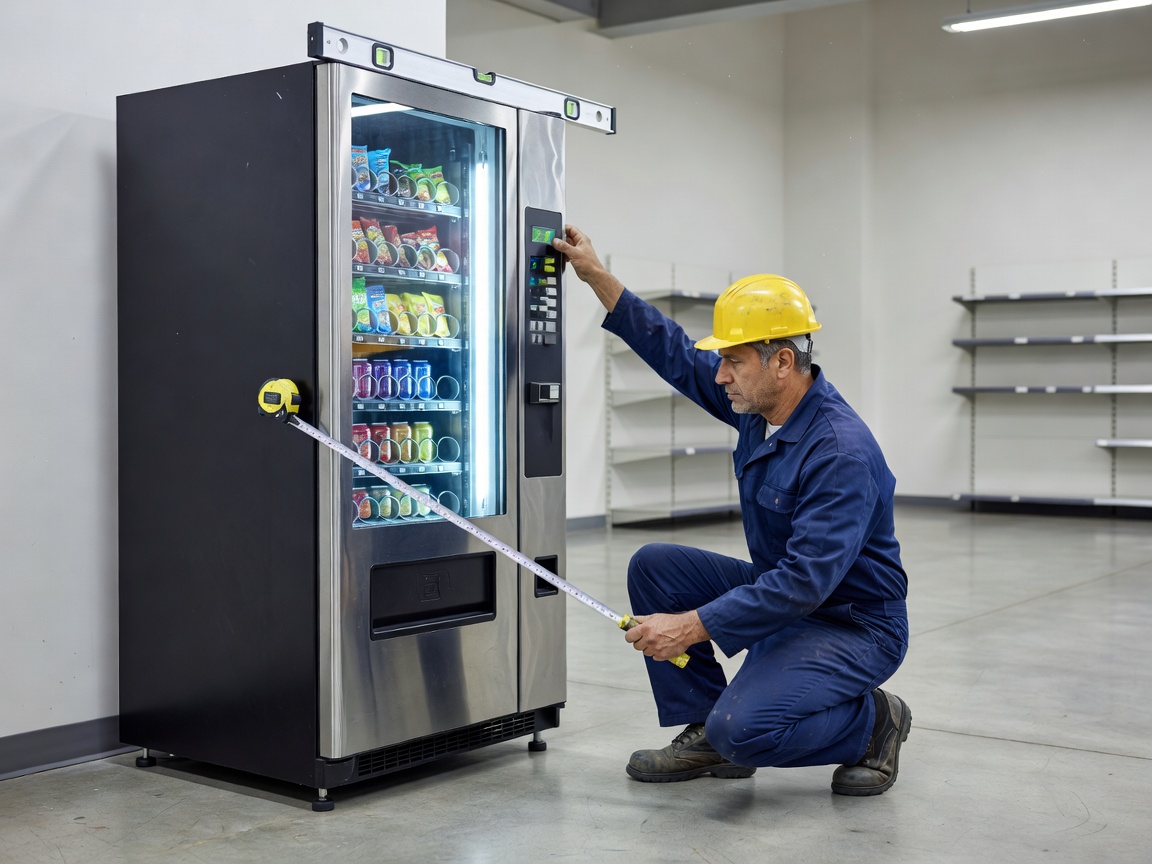
Physical Clearance & Airflow
A minimum of 100mm rear clearance is standard to permit adequate airflow across the condensing coil. Enclosing a machine without exhaust ventilation forces compressors to cycle endlessly, driving up utility bills and courting early failure.
Where Professional Placement Is Essential
Not every space can accommodate high-throughput dispensing gear. Common application environments each demand a distinct installation mindset:
- Corporate Offices & Open Plan Studios: Noise dampening is paramount. Compressor resonance through raised flooring can irritate desk workers thirty meters away. Rubber isolation feet and strategic corner placements are required.
- Transport Hubs & Public Concourses: Physical anchoring to prevent tipping hazards, shatterproof window films, and recessed lock fixtures become mandatory for public safety compliance.
- Light Manufacturing & Logistics Centers: Dust ingress becomes a primary concern. Units must be placed away from overhead bay doors and fine packaging particulate to avoid choking cooling radiators.
Site Preparation Checklist
| Physical Parameter | Standard Consideration | Operational Risk |
|---|---|---|
| Power Supply | Dedicated 230V European standard grounded wall socket | Tripping shared circuits during dual refrigeration startup spikes |
| Floor Leveling | Adjustable feet leveled on both longitudinal and lateral axes | Misaligned drop chutes causing products to hang on spiral spirals |
| Door Swing Envelope | 90-degree to 110-degree clearance for full maintenance access | Restockers unable to pull sliding refrigeration decks completely forward |
| Ambient Temperature | Controlled indoor envelope between 10°C and 32°C | Excessive cabinet condensation and internal freezing of drink lines |
Selecting Machine Formats for the Space
Choosing between spiral dispensers, conveyor elevators, and carousel snack units depends heavily on the intended product catalogue. Heavy bottles drop poorly from top spirals without an elevator cradle; fragile snack packaging can burst if dropped from a meter high onto steel retrieval chutes.
During site planning, we walk through the exact user flow: where the queue forms, how payment screens catch natural daylight (avoiding severe screen glare), and whether waste bins and recycling bins sit adjacent to the point without blocking technician doors.
Questions to Consider Before Arranging Delivery
Before confirming an installation schedule with any equipment supplier or facilities manager, these five questions should be answered in writing:
- Is the freight elevator capacity rated for both the machine mass and the two-person transport team?
- Does the designated wall outlet connect to an isolated circuit breaker that won't be turned off by nighttime janitorial sweeps?
- Are there building security clearance protocols needed for external technicians carrying hand tools?
- Has the cellular signal been verified at the exact alcove position, or will an external antenna lead be required?
- Who holds ultimate sign-off responsibility once the initial test drop sequence completes?