The old style of vending maintenance was purely reactive: wait until someone in accounting calls to say their sandwich got stuck behind row 3, then send a technician three days later. Modern operations take the opposite approach.
Core Elements of Routine Machine Servicing
Vending hardware consists of three interdependent subsystems: the thermal management unit, the electromechanical dispensing rack, and the digital payment/telemetry stack. A breakdown in any one of these three brings the entire machine to an operational halt.
During a routine preventative service visit, a technician performs specific tasks tailored to keep these components within their nominal tolerances:
- Condenser Coil Brushing & Vacuuming: In high-footfall workplaces, clothing lint and dust accumulate rapidly against the refrigeration intake. Cleaning this quarterly drops operating temperatures by several degrees and cuts power consumption significantly.
- Optical Drop Sensor Calibration: Modern vending machines rely on infrared beams across the delivery bin. If a dropped item fails to break the beam, the spiral nudges forward again or refunds the customer. If these lenses collect dust, false trigger states occur.
- Gasket and Seal Verification: Chilled machines must retain cold air without leaking moisture onto the outer pane. Damaged magnetic gaskets lead directly to glass fogging and internal icing.
- Firmware & Reader Validation: Contactless EMV readers require regular security certificates and kernel updates to avoid transaction dropouts with modern banking apps.
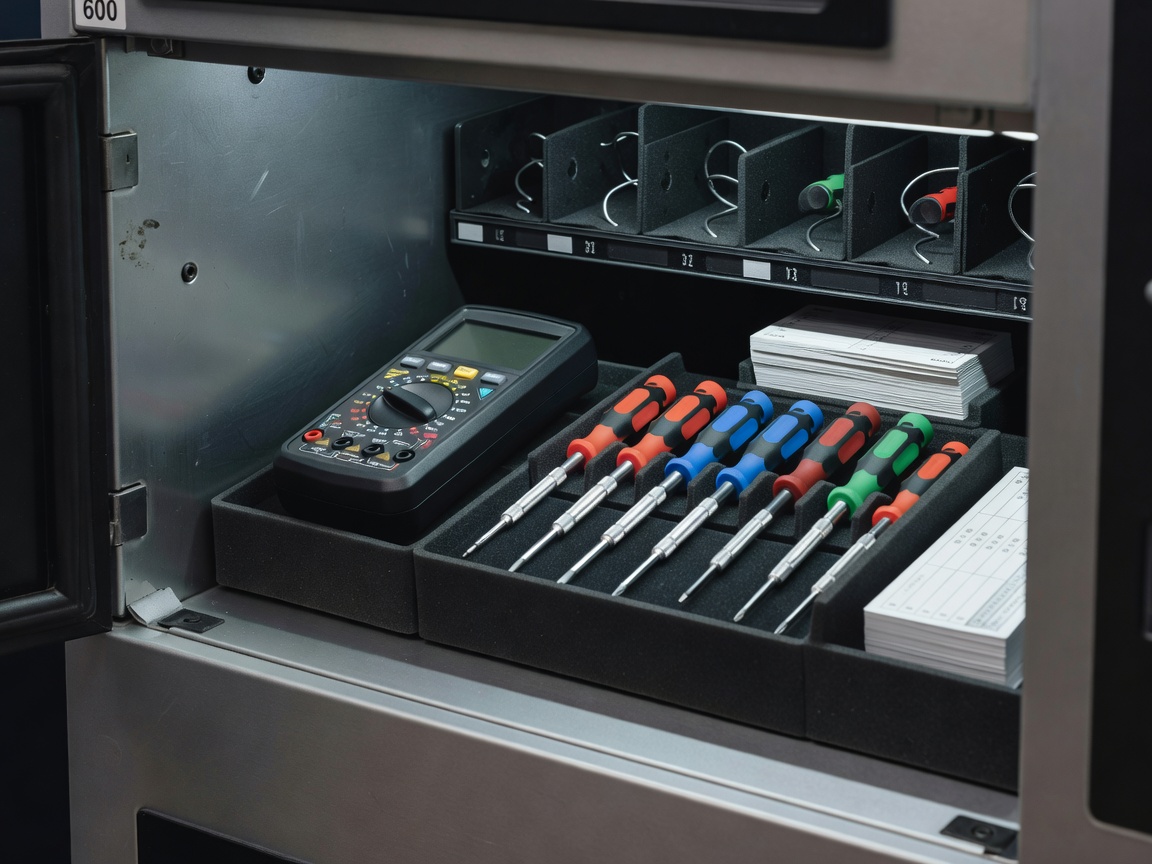
Diagnostics Over Guesswork
Service technicians connect directly to the internal MDB (Multi-Drop Bus) diagnostic port to review logged motor errors, voltage drops, and failed vend counts before touching a mechanical component.
Comparing Preventative Care vs Reactive Callouts
| Operational Factor | Scheduled Preventative Servicing | Ad-Hoc Reactive Repair |
|---|---|---|
| Machine Downtime | Predictable 30-minute off-peak window | Uncertain days waiting for dispatch and specific spares |
| Equipment Longevity | Extended operational lifespan through steady component care | Premature compressor burnouts and stripped motor gears |
| User Experience | Consistently working dispensing and clean physical interface | Frequent refund claims and negative perception from building occupants |
| Operating Cost Pattern | Smooth, predictable monthly maintenance allocation | Volatile emergency call-out fees and parts expedite costs |
Refrigeration Considerations in European Climates
Refrigeration demands vary markedly between an unheated logistics warehouse in Poland during January and a glass-atrium workplace in Madrid during July. In southern zones, machines work against heavy ambient heat loads, requiring robust condenser fan checks. In humid Atlantic or northern environments, condensation drain trays must be cleaned regularly to prevent fungal build-up and drainage blockages.
Common Field Failures and How to Prevent Them
Over years of reviewing maintenance tickets, three recurring culprits account for the majority of sudden out-of-order states:
- Sticking Delivery Chute Flappers: Debris or spilled liquid gumming up the bottom return spring, triggering the machine's anti-theft lockout switch.
- Misaligned Spiral Motor Detents: When a motor does not park cleanly at the 360-degree point, products sit half-tipped over the edge.
- Loose Telemetry Antennas: Vibrations from the compressor loosening the coaxial connector, leading to sporadic cashless transaction declines.
Every routine servicing routine should follow a documented checklist, concluding with a full end-to-end test transaction: selection, payment authorization, motor cycle, optical beam break, and clean flap closure.