Good restocking isn't just dumping twenty chocolate bars into an empty slot. It is an ongoing balance between shelf space constraints, product shelf lives, and the varying habits of the people walking past each day.
Understanding Tray Space and Product Density
Every vending cabinet has a finite cubic volume. How you allocate that volume dictates both user satisfaction and visit frequency. A standard combo machine typically offers between four and six pull-out trays, each configurable with different spiral pitches:
- Single-Pitch Spirals (Narrow): Designed for standard canned drinks, single chocolate bars, or slim protein bars. High density per tray, but limited to compact packaging.
- Dual-Pitch Spirals (Linked): Two coupled motors spinning in unison to gently advance wider bags of crisps, baked goods, or boxed meal portions without tilting them sideways.
- Bottle Trays with Pushers: High-friction surfaces using spring-loaded pushers rather than coils to feed glass or PET bottles cleanly forward to the drop barrier.
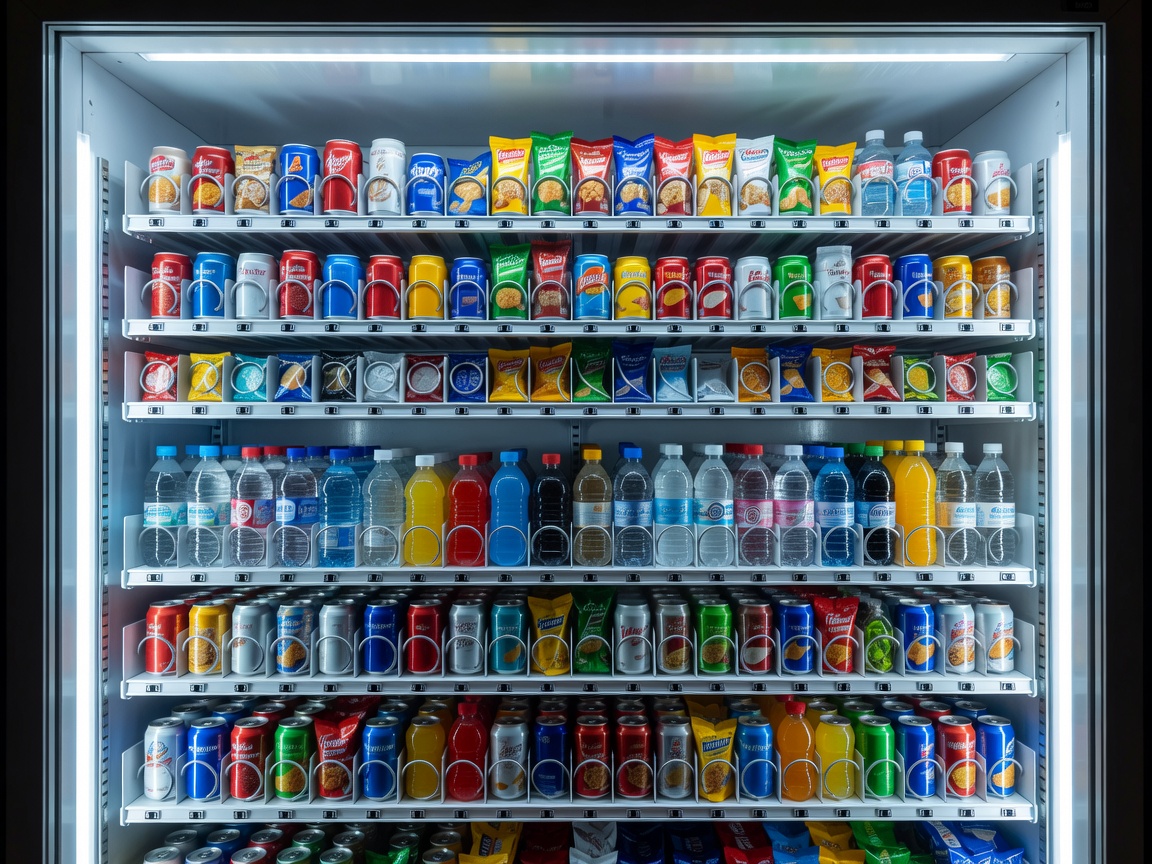
Visual Order & Confidence
When product packaging sits upright with brand labels facing directly forward, transaction times decrease. Users trust a clean, tidy machine far more than one with crooked, wedged items.
FIFO Rotation: The First-In, First-Out Principle
Unlike open grocery shelves where a shopper can easily reach past an item with a closer expiry date, a vending machine is a strict queue. The item in the front coil must vend before the item behind it moves forward.
If a restocker takes the shortcut of simply pushing fresh inventory into the front of the tray, the oldest stock is shoved to the back. There, it sits until it passes its best-before date, eventually leading to waste or an unhappy customer. Professional restocking procedures require the route driver to pull remaining stock forward, slide new batches into the rear, and re-face the front.
Planning Restocking Frequencies
| Environment Type | Typical Restock Cycle | Primary Driver |
|---|---|---|
| Busy Corporate Campus (300+ staff) | 2 to 3 visits weekly | Afternoon snacking rush and fresh food short shelf life |
| Multi-Tenant Co-Working Hub | Weekly scheduled run | Steady baseline beverage turnover and specialty snacks |
| 24/7 Logistics / Depot Center | 2 visits weekly | Night shift demand for energy drinks and substantial snacks |
| Boutique Design Studio / Agency | Bi-weekly (fortnightly) | Focused premium items with longer shelf stability |
Avoiding the Common "Phantom Stock" Problem
In modern connected machines, inventory is often tracked through remote telemetry boards. However, discrepancy happens when:
- An item fails to drop, the spiral steps forward, but the system logs it as vended.
- A restocker swaps a slow-selling peanut bar for an oat slice without updating the machine's internal planogram database.
- A damaged packet is removed manually without an adjustment barcode scan.
These small discrepancies create "phantom stock"—where the remote dashboard shows three items available, but the physical spiral is completely empty. Performing a manual line-by-line inventory reconcile during every fourth visit keeps digital dashboards tethered to physical reality.
Questions to Review During Stock Category Planning
Before locking down product categories for a site, consider:
- Does the building have catering or cafeteria services nearby, or is the vending machine the sole food source after 17:00?
- What is the balance between traditional indulgence items and zero-sugar, functional, or allergen-conscious alternatives?
- Are there seasonal temperature fluctuations that require shifting from chocolate bars (risk of softening in warm months) to baked biscuits and trail mixes?